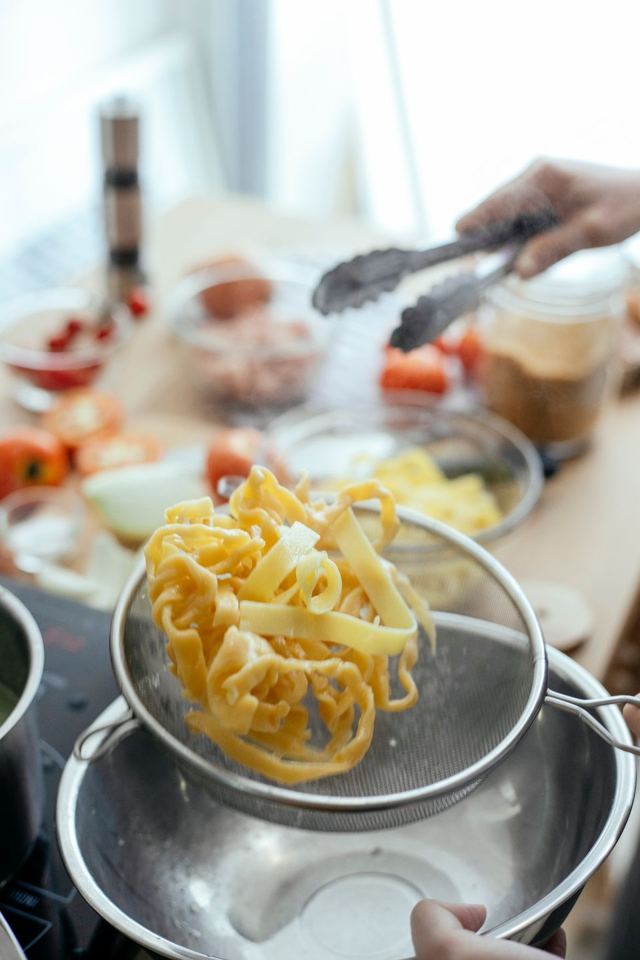
A colander may spend only a short time on the counter but occupies storage space permanently. The best shape therefore depends on more than the biggest pot in your home. Consider how much you normally drain, whether you also use it to rinse vegetables and the movements required between hob and sink.
Compare portions rather than set sizes
A large colander holds several portions but may be unnecessarily bulky for small amounts. A smaller strainer can suit rinsed berries or a single serving, provided its openings suit the ingredient. Fine mesh and large holes perform different jobs. Do not plan to drain rice in a colander if the grains would fall through. When you want one tool for several tasks, check each task against the foods you actually use.
Match the base and handles
A freestanding colander should remain stable on the intended surface and keep its contents clear of draining water. Look at the feet and underside. For a model with extended supporting arms, compare your sink’s internal measurements with the adjustable span. Handles need room for appropriate gripping as described in the instructions. A compact colander offers little benefit if you can only steady it by reaching for an inaccessible edge while draining.
Folding designs still involve trade-offs
A collapsible version can free cupboard space. Check how it unfolds, whether it stays properly in its intended position and whether the folds are accessible for cleaning. Read the permitted temperature and intended uses for that specific product. The word silicone alone does not establish suitability. Also compare folded height with an ordinary shallow colander, which may already fit neatly into the cupboard without requiring a folding mechanism.
Walk through cleaning and storage
Starch and small pieces of food can lodge at edges, seams and mesh intersections. Easy access with your existing washing brush is therefore a practical advantage. Check dishwasher approval if you rely on machine cleaning. A hanging hole needs a suitable dry location; spare hooks behind the sink are not automatically a complete storage solution. Buy an additional draining attachment only when it is explicitly compatible with the pots you already own.
Before you buy
- Identify normal portions and the smallest ingredients used.
- Match supporting feet or adjustable span to the sink.
- Check handle access and permitted temperatures.
- Plan cleaning access and the final storage position.
A useful colander fits your most common task and the route between hob and sink. Compactness helps when it also allows comfortable handling.