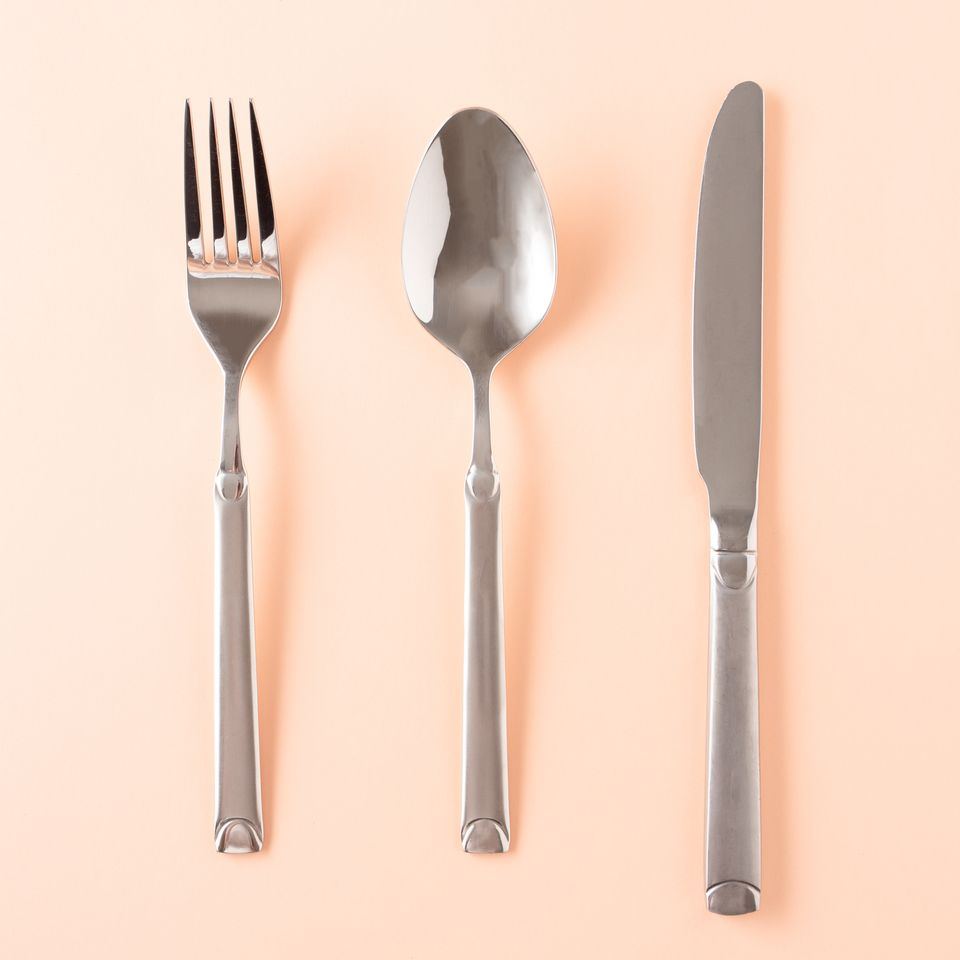
Cutlery sets are often promoted with a high piece count. That number may include small serving utensils and extra spoons, although you mainly need ordinary knives and forks. Start with complete everyday place settings and assess how they feel in your hand. The cutlery should suit your meals and stay organised in your existing drawer.
Break down the contents of the set
Write down how many knives, forks, large spoons and small spoons are actually included. Relate the necessary standard pieces to the people in your household and how often you wash up. Six settings may suffice when washing follows meals promptly; several meals between washes create a different requirement. Extra serving forks do not replace missing everyday utensils. Compare prices per useful place setting rather than merely per individual metal object in the box.
Check balance at the table
A thick handle adds weight but is not automatically more comfortable. Hold the fork and spoon as you normally would when eating and notice the edges and weight distribution. A very large spoon bowl does not suit every cup or dish. Compare overall length with your plates too. For knives, consider whether handle and blade work comfortably together for your usual foods; different shapes can feel noticeably different over an ordinary meal.
Consider the drawer and dishwasher basket
Measure the length of the compartments in your cutlery insert. Particularly long knives may only fit diagonally, making other pieces harder to retrieve. Check your dishwasher instructions for loading cutlery and read the care guidance for the particular set. Decorative joins or attached handle sections create extra places to clean. A material description alone tells you little about the full surface finish, handle construction and permitted washing methods. Clear instructions are more informative than a glossy photograph.
Individual replacements can add lasting value
Spoons disappear, a knife becomes damaged and households change. Check whether frequently used pieces are available individually or in small packs. A common design may make searching easier, although it does not guarantee permanent availability. When choosing between two sets, compare actual handling and the quantity required. A presentation case mainly occupies space after unpacking unless you deliberately intend to use it for storage rather than keeping the cutlery in a drawer.
Before you buy
- List standard pieces and the number of settings required.
- Try handle edges, weight and spoon size.
- Compare overall length with drawer compartments.
- Read care guidance and check individual replacement options.
Good everyday cutlery suits your hand, dishes and washing routine. Pay for comfortable, usable settings rather than the biggest number printed on the packaging.