A wall mirror should perform a particular job in its chosen position. In a hallway you may want to see your clothes; above a chest of drawers, your upper body or part of the room may matter more. These tasks require different dimensions and heights. Start with where you will stand and the wall area available before selecting the frame.
Try the view you want to achieve
Mark the proposed outline with paper on the wall and stand where you would normally look at yourself. Paper cannot reproduce the eventual reflection, but it makes size and viewing direction easier to understand. Check whether the centre of the area sits sensibly for different people in the household. A full-length mirror needs different planning from a small mirror over furniture. Measure how far you can actually step back in a narrow hallway as well.
Consider the room that will be reflected
Think about what the mirror would show: a window, open door, seat or a surface that is always covered in objects. The bright view in a promotional photograph does not automatically appear on your wall. Check the position at different times of day and from places where you sit or walk past. A mirror can reveal lights and movement that are less noticeable in your direct view. Plan the reflected scene as deliberately as the frame colour.
Check the wall and hanging system before buying
Read the weight, permitted orientation and manufacturer’s description of the hanging arrangement. Not every mirror may be placed horizontally or vertically at will. Suitable fixings also depend on wall construction. Establish what the wall is and seek competent help if uncertain rather than assuming included fittings suit every surface. Check whether the necessary hangers form part of the offer. For large or heavy models, include transport to the final location in the buying decision.
Assess the frame and care together
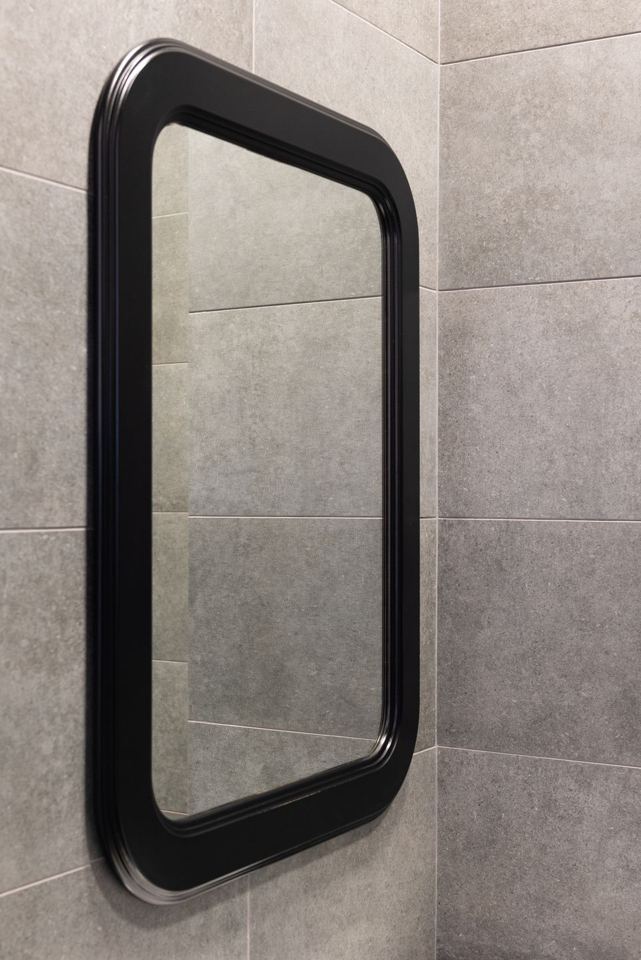
A broad frame increases overall dimensions without providing the same increase in mirror area. Compare those measurements separately. Deep decoration, narrow joints and projecting edges require more attention during cleaning. For a bathroom, explicit suitability for that location matters. Read care guidance for both glass and frame because one cleaner may not be intended for both surfaces. A simple, well-fitting design can therefore be more convenient than an elaborate frame placed in unsuitable conditions.
Before you buy
- Set the desired body view and viewing distance.
- Compare overall dimensions with actual mirror area separately.
- Establish weight, orientation and wall construction beforehand.
- Read location suitability and care for glass and frame.
A suitable wall mirror combines a useful view, appropriate wall and sensible dimensions. Let the frame complement those decisions rather than determine them.