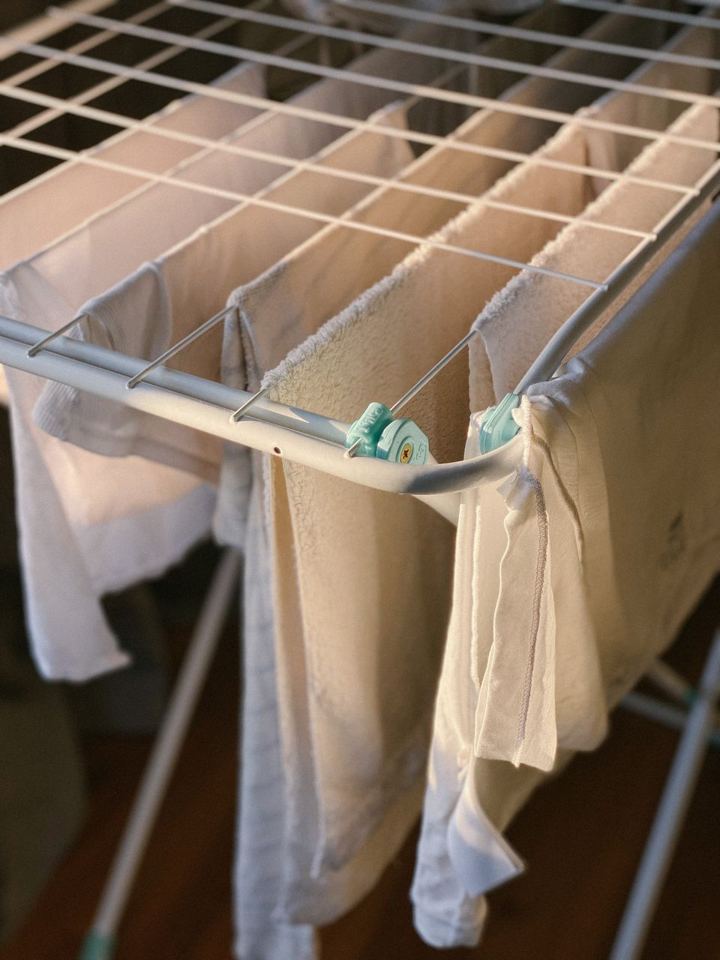
A drying rack’s advertised line length seems like an easy comparison. It does not tell you whether a duvet cover hangs comfortably, the wings project into the hallway or you can still reach a cupboard. Start with available floor space and the clothes you regularly dry. The largest claimed hanging length is not automatically the best solution.
Mark its open shape on the floor
Measure the intended position and mark the outer dimensions of an open rack using strips of paper. Include door movements and access to the window. A tower rack needs a different footprint from a winged design. Check whether sliding sections can extend completely without striking nearby furniture.
The rack needs to stand securely on the floor you will use. Inspect feet, joints and locking mechanisms. A light model is convenient to carry but should not tip unpredictably during ordinary loading. Follow the manufacturer’s loading and placement instructions and keep essential walking routes clear.
Work backwards from long items
Measure the longest items you regularly hang. A high level may help with trouser legs, while multiple close tiers are not necessarily useful for broad towels. Total hanging length also says little about spacing between bars. Crowded rails can make the task awkward even when the stated capacity sounds generous.
Check whether you can spread a large cover across several rails without overloading the rack. Small sock holders are a useful extra for some households, but they cannot replace a usable main surface. Buy additional attachments for tasks that actually occur in your laundry routine rather than an imagined complete setup.
Folding it is part of using it
Look up the folded measurements, including protruding feet and holders. Will it fit behind the door without preventing the door from opening? Can you carry it using the intended grip? Watch where fingers approach joints during opening and closing, and operate the lock as instructed.
Store the rack dry and inspect coatings, connections and rails for damage. When drying indoors, also consider the ventilation your home needs; the rack does not provide air exchange itself. Accessible storage makes it easier to put the appliance away after use rather than leaving it permanently in a passage.
Before you buy
- Mark the open footprint on the floor.
- Allow for long and broad laundry items.
- Check stability and the manufacturer’s load limits.
- Inspect folded size, carrying grip and dry storage.
A drying rack fits when it works well open and stores easily closed. Compare its shape with the laundry you actually own.