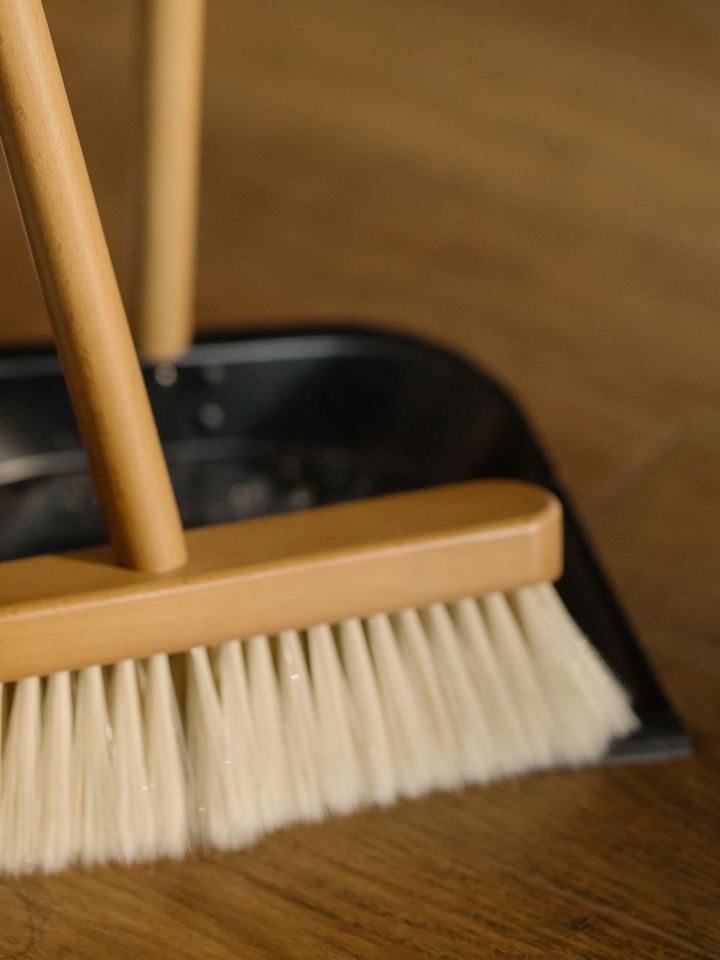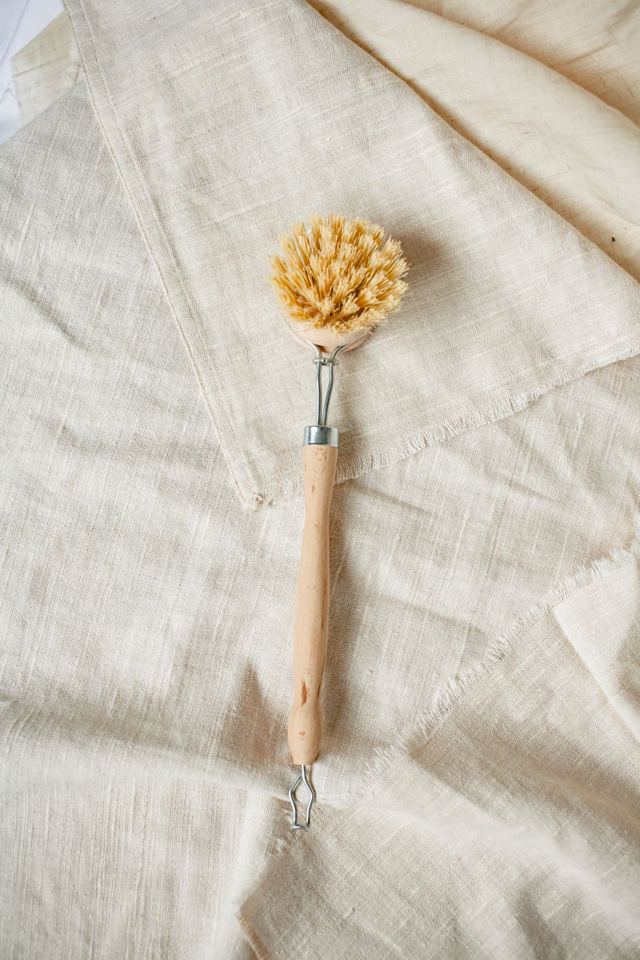
A dish brush with a replaceable head keeps the handle in service while the part exposed to wear is changed. Whether that arrangement works well depends on the whole system. An attractive handle is little help if the connection is awkward or you later cannot identify which replacement head actually fits it.
Match the shape to your dishes
Compare the brush head with the items you wash by hand. A narrow drinking bottle needs a different shape from a large plate. A round dish brush will not necessarily reach the bottom of every mug. Measure the tightest opening instead of considering only your largest saucepan.
For coated pans and delicate tableware, check which cleaning tools are permitted. Firm bristles or an integrated scraping edge should not be used without that check. A second specialist brush may be worthwhile when it reaches a genuinely different shape; that does not automatically require a large brush collection.
Inspect the connection carefully
Replacement heads may push, twist or clip into place. Read how the head comes off and whether tools are needed. Where possible, inspect the connection on a display model. The head should stay secure during ordinary use while still releasing deliberately through the intended replacement method.
Record the exact handle series. Heads from the same brand are not necessarily interchangeable. Find the appropriate refill pack before buying, and compare its cost per head. A cheap initial brush is less appealing if the part you will need later is offered only in an unwanted large bundle.
Plan its place beside the sink
Decide where the brush will dry after washing up. A hanging loop needs an accessible hook, while a holder needs sufficient counter space. The bristle end should not remain in standing water. Wood, plastic and mixed-material products can have different care requirements.
Remove visible food debris and maintain the brush according to its instructions. Not every handle or head is dishwasher safe. A fixed replacement timetable will not suit every usage pattern either. Inspect the bristles, connection and smell regularly, replacing parts that are damaged or cannot be kept acceptably clean through permitted care.
Before you buy
- Compare head shape with frequently washed containers.
- Check permitted tools for delicate dishes.
- Find matching replacement heads before buying the handle.
- Consider hanging, drying and care instructions.
A replaceable head makes sense as part of a workable system. A matching connection, accessible refills and a suitable drying place are the deciding details.