Shoe racks are often chosen by their advertised pair capacity. That number is not very useful when winter boots, broad trainers and narrow sandals must share the space. First gather the shoes you actually want near the entrance. Pairs used rarely or in another season can be stored elsewhere.
Measure the shoes you own
Place typical pairs beside one another and measure their combined width. Also measure the longest shoe and the tallest style you regularly wear. Consider the clear opening between shelves, rather than just the distance between their upper surfaces.
Rack photographs often show similar shoes throughout. An advertised pair count therefore does not guarantee space for your collection. Adjustable shelves can help with boots, but check how much storage area you lose when making one compartment taller.
Allow space for closed-door designs
In a shoe cabinet with tilting compartments, the internal shape of the insert matters. A long or tall pair may hit a crossbar even when the outer dimensions seem generous. Look for usable depth measurements and a picture of the open interior.
Consider where you stand while opening it. A tilted front takes up additional hallway space. The entrance door should still move freely. Check the whole routine from coming inside to putting shoes away, not just the appearance of the closed cabinet.
Inspect shelf surfaces and cleaning access
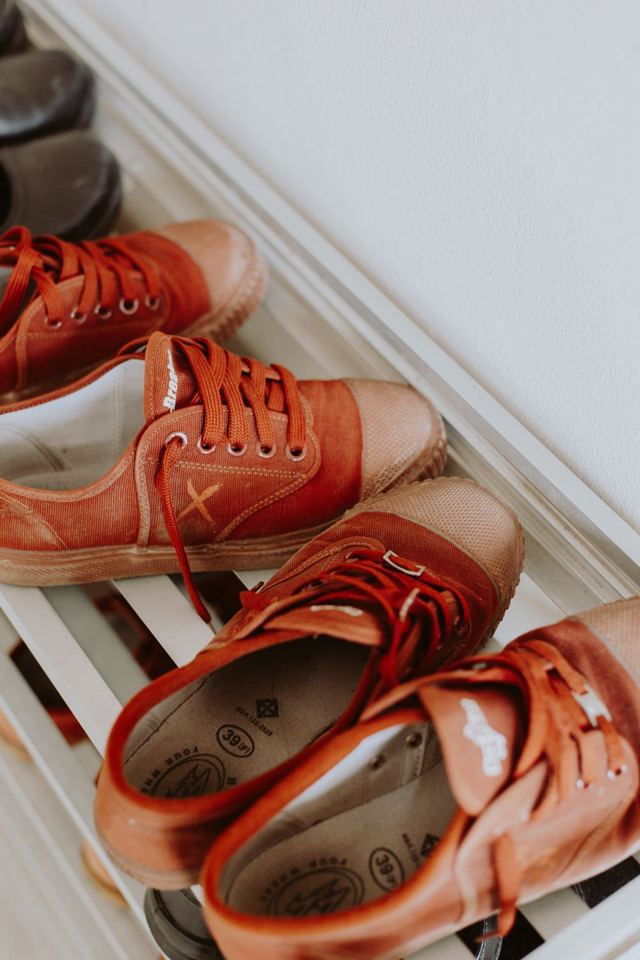
Narrow rails and broad gaps do not suit every sole. Small shoes may rest differently from wide trainers. A solid shelf provides another type of support but still needs to be accessible for cleaning.
Plan somewhere for wet or heavily soiled shoes before returning them to regular storage. Follow the care instructions for shoes and furniture. A compartment immediately above delicate textiles is awkward for this purpose. Removable trays may simplify cleaning if they are easy to put back.
Limit the everyday collection
Reserve accessible positions for pairs currently worn most often. Children and other household members should reach their shoes without rearranging the rack. A large unit does not automatically solve the hallway better than a small one with clear assignments. Follow the manufacturer’s assembly and fixing instructions. Add storage only when the required collection and actual shelf dimensions have been considered together.
Before you buy
- Measure the longest and tallest pairs.
- Compare usable compartment dimensions.
- Allow opening room for doors or flaps.
- Check cleaning access and everyday quantities.
The right shoe rack holds your actual pairs while keeping the hallway usable. Its advertised pair count is only a starting point.