A shoe brush is often bought alongside a new cream. Reversing that sequence makes more sense: first identify the materials in the shoe and the care its manufacturer specifies. Uppers, trims and soles can have different requirements. A small, clearly assigned collection is more practical than a set whose brushes become difficult to distinguish later.
Start with the particular shoe
Find the material description and model’s care instructions. Surfaces that look smooth do not necessarily need the same treatment. Even a leather shoe can include coated or textile panels. If the information is missing, ask the supplier before choosing a care product or a firm brush.
Special tools are sold for textured or napped finishes. Choose them only where intended for the actual material. A metal or rubber edge is not a universal cleaning tool. Especially on coloured or delicate surfaces, try a permitted method gently in an inconspicuous place first.
Keep soles and uppers separate
Soles often carry coarser debris than uppers. Do not take a brush used there straight onto the upper without checking it. Remove collected grit and dirt from the tool. Clear labelling or a different shape can make a sole brush easy to recognise, particularly when several people use the same shoe storage area.
Distinguish applying from finishing
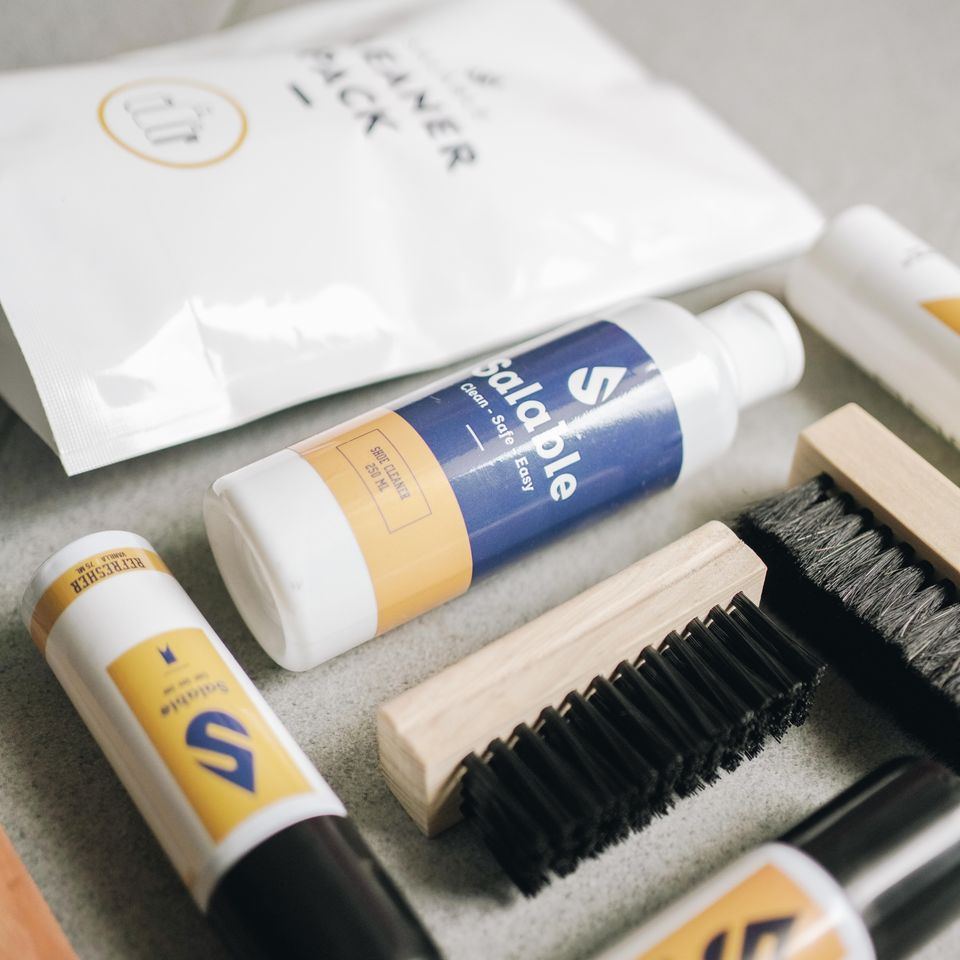
Where care instructions permit a cream, application and finishing tools may perform separate jobs. Compare shape, bristles and grip. A small head reaches narrow areas, while a larger brush works across broader surfaces. Do not buy every size in advance; start with the tools needed for the shoes you already own.
Keep tools for different coloured products suitably separate. A brush carrying dark product residue should not touch pale shoes without appropriate cleaning. Store it with an obvious assignment. A colourless care product is not automatically suitable for every material either; its stated compatibility still matters.
Store a set you can maintain
Keep brushes dry and avoid permanently bending their bristles in storage. Follow the tool manufacturer’s cleaning and drying instructions. Check for loose bristles, hardened deposits and damaged handles. When a new pair arrives, add only the tool its care requires rather than buying another complete duplicate set.
Before you buy
- Read the material information for the particular shoe.
- Separate sole brushes from upper-care tools.
- Assign application tools according to product colour.
- Check shoe and brush care instructions together.
The shoes determine the brush. Clear assignments by material, task and, where relevant, colour make a small care kit useful.