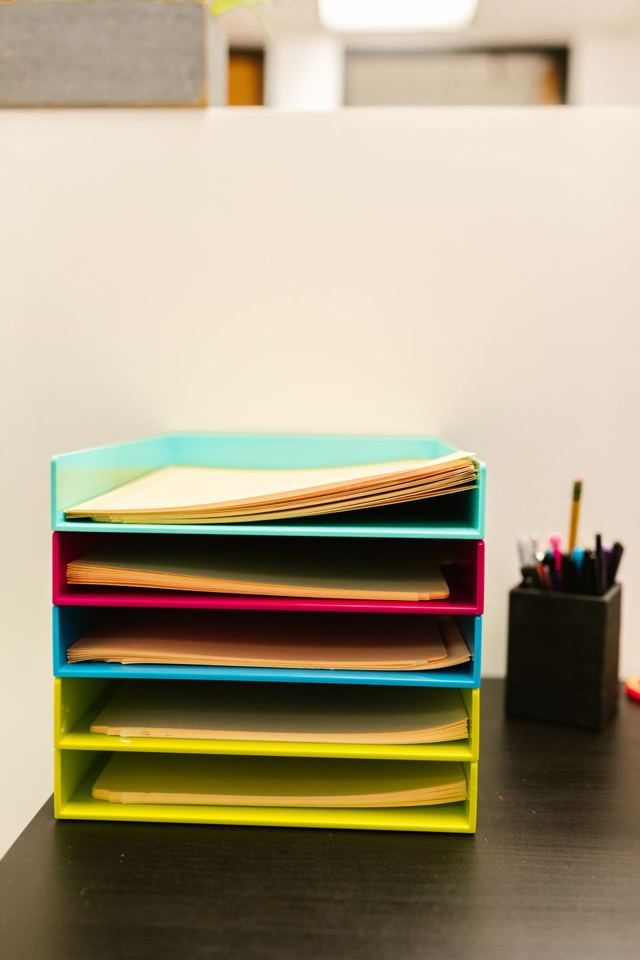
A desk tray can keep important documents visible or become permanent temporary storage. The difference lies less in its colour than in the purpose of each compartment. Before buying, consider which papers arrive daily and what you must do with them. You need a tray that papers leave, rather than simply more room for a growing pile.
Name compartments after actions
Useful groups might be “Action”, “Waiting for a reply” and “File away”. They describe what happens next. Sorting solely by origin, such as bank or insurance, may work for later storage but does not identify an outstanding task.
Limit levels to the processes you actually distinguish. Too many similarly named compartments create extra decisions. If you need only two groups, the right system does not require six tiers. An empty tray is not evidence of missing equipment.
Check paper size and retrieval
Compare usable area with your usual documents, folders and envelopes. Outer measurements often include side walls and handles. Check whether you can grasp a sheet from the bottom level without lifting the entire pile or the tray above.
A shallow open compartment makes small quantities easy to see. High sides hold more paper but can conceal an overflowing stack. If you mainly handle individual letters, high capacity is not automatically an advantage. Allow movement space beside your keyboard or notebook.
Consolidate incoming papers
Put new papers at one defined incoming position. Set aside regular time to open, assign and remove unnecessary inserts. Add appointments or tasks to the system you actually use to track those commitments.
A tray of urgent letters does not remind you of a deadline by itself. Record the next action and a date where appropriate. Once documents are no longer needed for processing, move them to their intended long-term storage.
Set a short clearing routine
Go through the compartments at a fixed time. For “Waiting”, ask what specifically you are waiting for; for “File away”, check whether the papers still need to remain on the desk. Avoid unnecessarily leaving private documents exposed if others use the workspace. Change compartment names when you repeatedly cannot decide where something belongs. The tray should reveal your workflow rather than create more administration.
Before you buy
- Name compartments after the next action.
- Check usable measurements and bottom-level access.
- Record tasks and dates separately too.
- Plan a regular clearing routine.
A working desk tray keeps outstanding actions visible and gives completed papers a way out. It does not necessarily require more compartments.