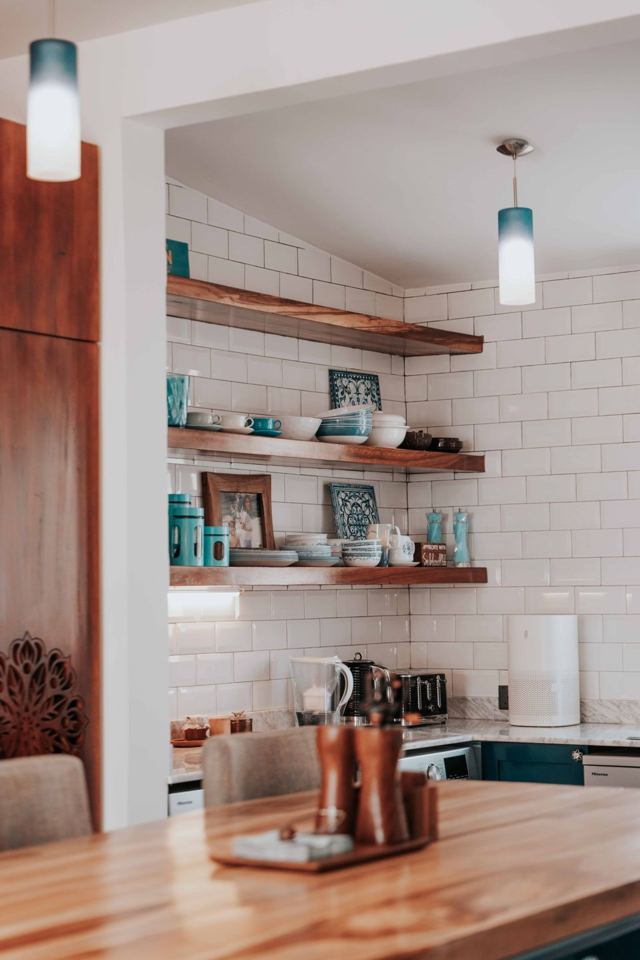
Open shelves reveal their contents immediately. This can make finding things easier but also exposes unsettled collections. Before buying baskets and extra inserts, decide what the shelving should do. Everyday cups in a kitchen need a different position from occasional serving pieces. Useful organisation starts with access rather than filling every surface.
Give each level a purpose
Assign shelves a few understandable jobs: everyday dishes, pantry supplies or occasional items. These groups do not need to be equally sized. Dividing a broad collection between numerous small areas may create extra journeys instead of improving clarity.
Keep frequently used things at an accessible height. Arrange heavy objects where you can lift them out under control. Follow the manufacturer’s load and installation specifications. A decorative arrangement does not replace suitable fixing.
Empty space is part of usable space
Leave enough room between objects to grasp them. A stack of plates that you can only slide out sideways may be too tightly packed. Check the arrangement using the hand movement you would actually make each day.
Use the full depth only if access to the rear row works. Occasional pieces can go there, but a second row of daily cups is easily overlooked. Fewer visible objects do not automatically mean less storage is needed; the underlying issue is often inconvenient access.
Use baskets selectively
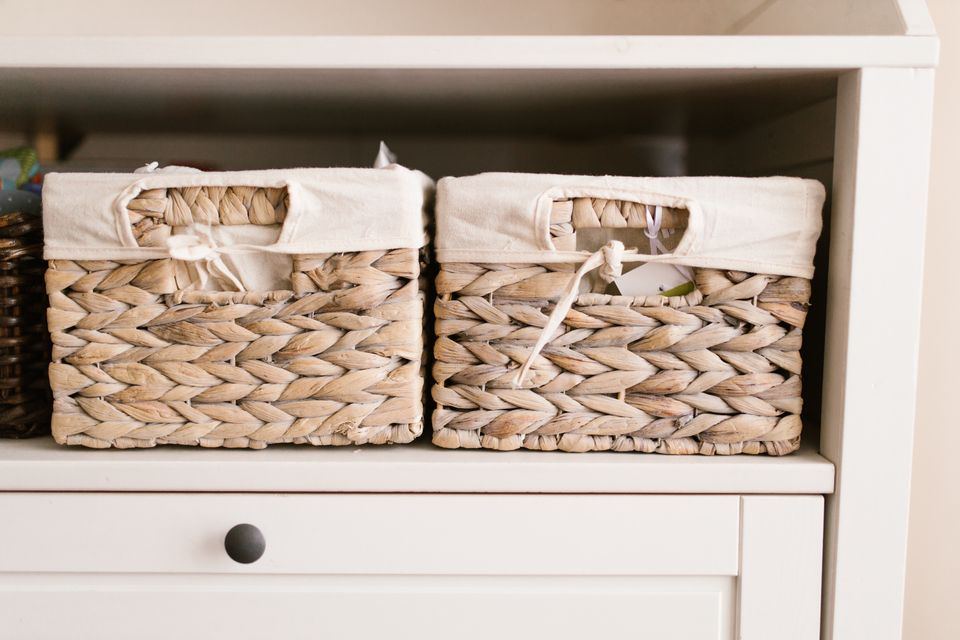
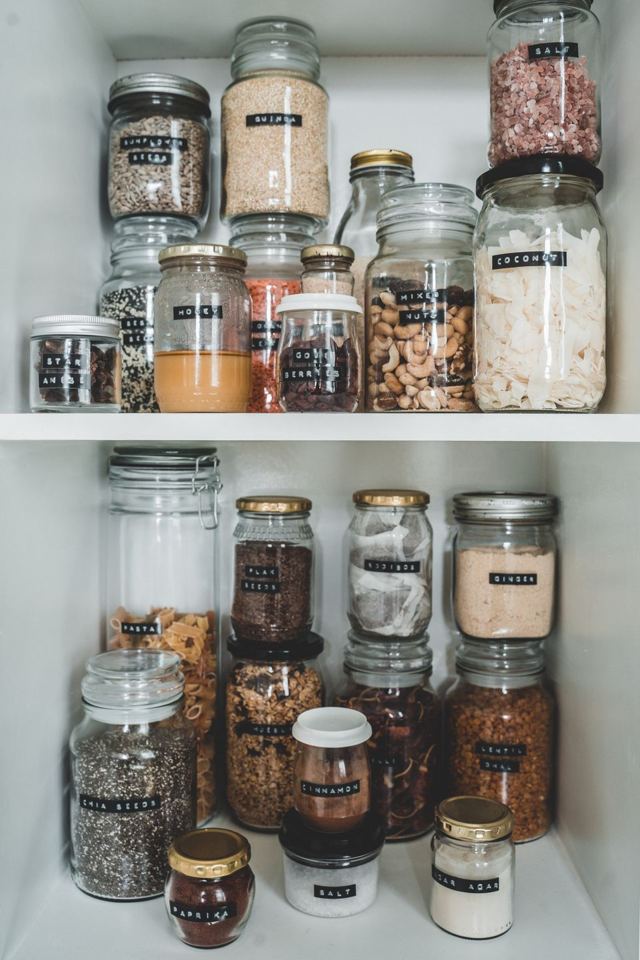
A container helps with small related items. Measure its width, depth and height, including handles. You should be able to remove it without hitting the shelf above. A label helps if its contents cannot be seen from outside.
Avoid containers that merely conceal loose objects with no defined purpose. A basket of everyday napkins has a clear job. A full basket of unsorted leftovers simply postpones a decision. Sort things before buying more baskets.
Plan cleaning without emptying everything
Open surfaces should remain accessible for wiping. Small groups on suitable trays can be easier to move, provided the tray itself is sensibly sized. After a few days, check which positions repeatedly become obstructed. Change the assignments instead of adding more levels. A shelf can have empty areas; they help with access, care and temporarily putting something down during a task.
Before you buy
- Define a few purposes for the shelves.
- Keep frequent items easy to reach.
- Check grip space and rear rows practically.
- Choose baskets after sorting.
Well-used open shelving makes its objects easy to recognise, retrieve and return. Empty space contributes to that function.