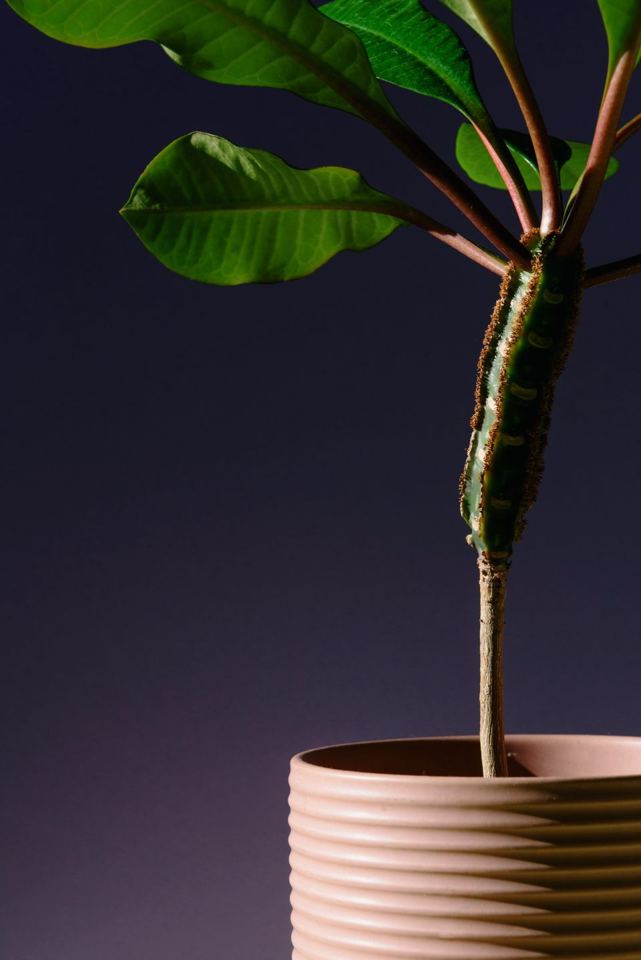
It is easy to confuse a planting container with a decorative cover pot while shopping. The existing inner pot and the outer vessel serve different roles. If you mainly want a more attractive position for an existing houseplant, start with its current pot. Its shape and your handling routine determine which cover actually fits sensibly.
Measure the existing inner pot completely
Measure its widest upper rim, base and height. A tapered cover pot may be too narrow inside despite a sufficiently wide opening. Compare internal dimensions rather than relying only on the outside diameter in a listing. The rim of the inner pot should remain accessible if you want to lift it out for watering. Allow some movement rather than fitting two containers so tightly that the inner one requires forceful pulling to remove.
Walk through the watering routine
Consider whether you normally water the plant in position or take it to the sink. With a decorative outer vessel, keep the inner pot appropriately accessible and removable. After your usual watering routine, consider how you check for remaining water instead of forgetting it behind a tall opaque wall. If you intend to plant directly into another container, that is a separate decision with plant-specific requirements rather than simply a change of decoration.
Consider material and position together
A heavy cover pot feels different from a light one and changes the total weight once plant and growing medium are included. Check whether you can still move the combination. Read whether the model is approved for indoors or for the outdoor position you intend. On sensitive furniture, information about watertightness and protecting the supporting surface matters too. A glazed or concrete-like appearance alone does not guarantee that moisture cannot reach the surface beneath over time.
Avoid buying oversize just in case
A very large cover may visually swallow a small inner pot and make checking its contents awkward. Choose for the present arrangement rather than allowing arbitrary empty space for growth. When grouping several plants, compare their combined footprints and your access for cleaning. One correctly fitted cover may be more useful than a decorative set whose smaller sizes match none of the containers you already own and need to accommodate.
Before you buy
- Measure the inner pot’s rim, base and height.
- Check internal dimensions and lifting access.
- Consider watering and checking for remaining water.
- Read about weight, location suitability and surface protection.
A cover pot should accommodate the existing inner pot while preserving convenient handling. The right internal shape matters more than a similar external diameter.