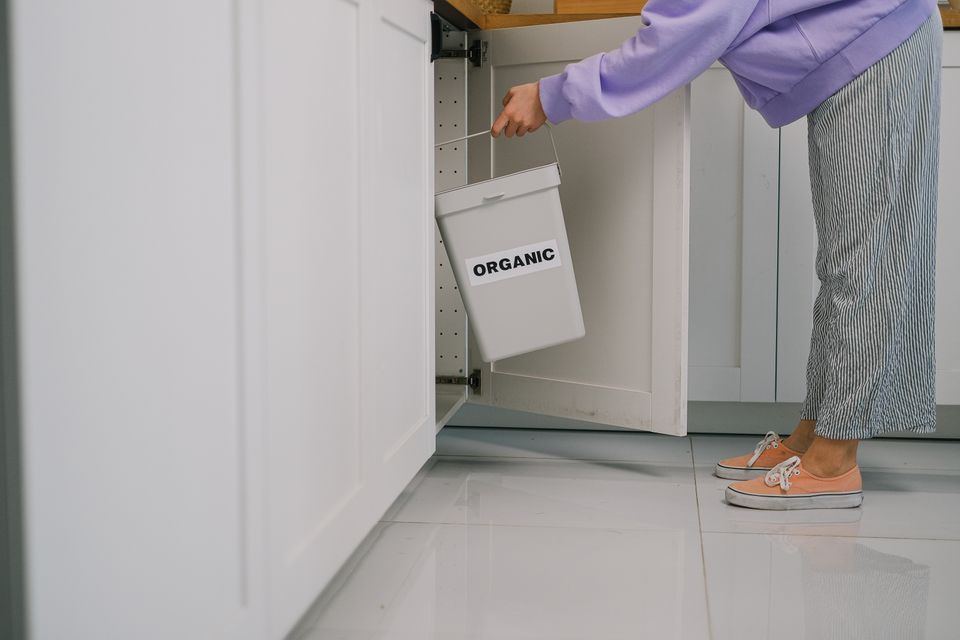
In a small kitchen, a bin often occupies space needed for a cupboard, shopping bag or walking route. Before buying, look at your existing routine. What waste do you produce, how do you separate it and how often do you take it outside? Suitable containers follow from those answers rather than from an oversized all-in-one system.
Plan separation before the layout
Follow the arrangements specified by your local waste service. Names and collection methods can differ. Allow more accessible space for frequent packaging than for things that appear only occasionally. Special waste needs its designated disposal route rather than simply another compartment in the kitchen.
Observe which waste group fills first over several days. A set of equally sized compartments can be inconvenient if one continually overflows while the others remain almost empty. Paper may work in a separate dry collection area elsewhere, provided it does not obstruct the space or its users.
Measure it open as well as closed
A pedal-bin lid needs room to rise beneath a worktop or shelf. A swing lid needs clearance inside and outside the container. Beneath the sink, allow for the trap, pipes and cupboard-door movement. Draw the usable footprint on paper before ordering a pull-out system.
Check how you would lift out a full inner container. Its handles need to remain accessible, and the bag should not catch on sharp edges. A slim bin may fit a gap yet be awkward to operate between furniture. Comfortable daily access matters more than using the final centimetre of space.
Make emptying and cleaning manageable
Compare suitable bag sizes and how they attach. A particular system can create ongoing costs if only a special format fits neatly. Find out whether ordinary bags are supported by the supplier. A removable lid and smooth inner surfaces can make cleaning easier when you can actually reach every part.
Choose capacity around your real emptying schedule. A larger container does not remove the need to take damp waste out promptly. Clean according to the material instructions and let it dry before reuse. In a compact kitchen, a few accessible containers can work better than a bulky unit that is difficult to handle.
Before you buy
- Check local waste-separation arrangements.
- Observe how quickly the different groups fill.
- Measure lid movement and removal clearance.
- Inspect bag fit, inner surfaces and the emptying route.
Plan waste separation as a daily journey. A compact bin works well when it is easy to open, empty and clean.